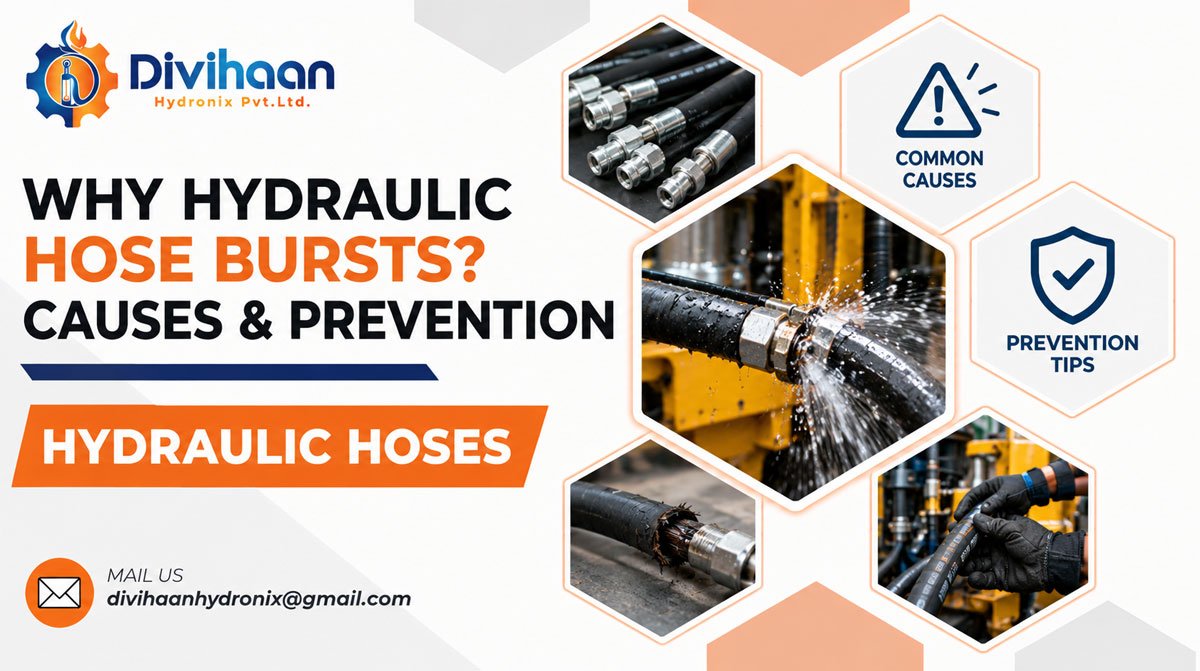
A hydraulic hose burst can happen because of excessive pressure, abrasion, incorrect hose selection, poor routing, improper installation, high temperatures, damaged fittings, contamination, or normal deterioration over time. Because hydraulic hoses carry fluid under high pressure, even a small weakness can eventually develop into a serious hydraulic hose failure.
A burst hose can cause fluid loss, pressure drop, machine downtime, equipment damage, and serious safety hazards. Understanding the common causes of hydraulic hose failure and identifying warning signs early can help prevent unexpected breakdowns.
What Happens When a Hydraulic Hose Bursts?
Hydraulic hoses carry pressurized fluid between pumps, valves, cylinders, motors, and other components. A typical hydraulic hose consists of an inner tube, reinforcement layers, and an outer protective cover.
When one or more of these layers becomes damaged or can no longer withstand operating conditions, the hose may leak, rupture, or burst.
A hose failure may result in:
- Sudden hydraulic pressure loss
- Loss of machine movement or lifting force
- Hydraulic oil leakage
- Unexpected equipment shutdown
- Contamination of the surrounding area
- Damage to nearby hydraulic components
- Potential operator safety hazards
Hydraulic hose problems should therefore be treated as both a maintenance and safety concern.
What Are the Common Causes of a Hydraulic Hose Burst?
A hydraulic hose rarely fails without an underlying reason. Understanding the cause is important because simply replacing the damaged hose without correcting the original problem may lead to another failure.
1. Excessive Hydraulic Pressure
Every hydraulic hose has a specified maximum working pressure. If the system repeatedly operates above the hose’s rated working pressure, the reinforcement can become overstressed. Sudden pressure spikes can also place additional stress on the hose assembly. Repeated pressure overload may eventually result in a hydraulic hose burst.
Always select hoses according to the pressure requirements of the hydraulic system, including expected operating conditions.
2. Abrasion and External Hose Damage
Abrasion is a common cause of hydraulic hose damage.
If a hose repeatedly rubs against:
- Metal surfaces
- Machine frames
- Other hoses
- Sharp edges
- Moving components
the outer cover can gradually wear away. Once the reinforcement becomes exposed, the hose’s structural integrity can deteriorate quickly. Protective sleeves, clamps, guards, and correct routing can help minimize abrasion.
3. Incorrect Hydraulic Hose Selection
Not every hydraulic hose is suitable for every application.
A hose should be selected based on factors such as:
- Working pressure
- Temperature range
- Hydraulic fluid compatibility
- Required inside diameter
- Bend radius
- Environmental conditions
- Application requirements
- Suitable fittings and connections
Using an incorrectly specified hose can significantly increase the risk of premature hydraulic hose failure.
4. Improper Hose Routing
Poor routing can cause hoses to twist, rub, stretch, bend excessively, or come into contact with hot or moving components.
How Does Incorrect Routing Cause Hydraulic Hose Failure?
A hose installed with insufficient bend radius can experience excessive stress at specific points. Similarly, a twisted hose can place unnecessary strain on the reinforcement.
Correct routing should allow enough movement for the machine while preventing excessive bending, twisting, abrasion, and tension.
5. Excessive Heat
High temperature can accelerate the deterioration of hydraulic hose materials.
Heat may come from:
- High hydraulic fluid temperature
- Engines
- Exhaust components
- Furnaces
- Industrial processes
- Poor ventilation around equipment
Over time, excessive heat can make the hose cover hard, cracked, or brittle.
How Can Heat-Related Hydraulic Hose Damage Be Prevented?
Keep hoses away from heat sources whenever possible. Where exposure cannot be avoided, use properly rated hoses and suitable protective measures recommended for the application.
Hydraulic oil temperature should also remain within the equipment and hose manufacturer’s recommended limits.
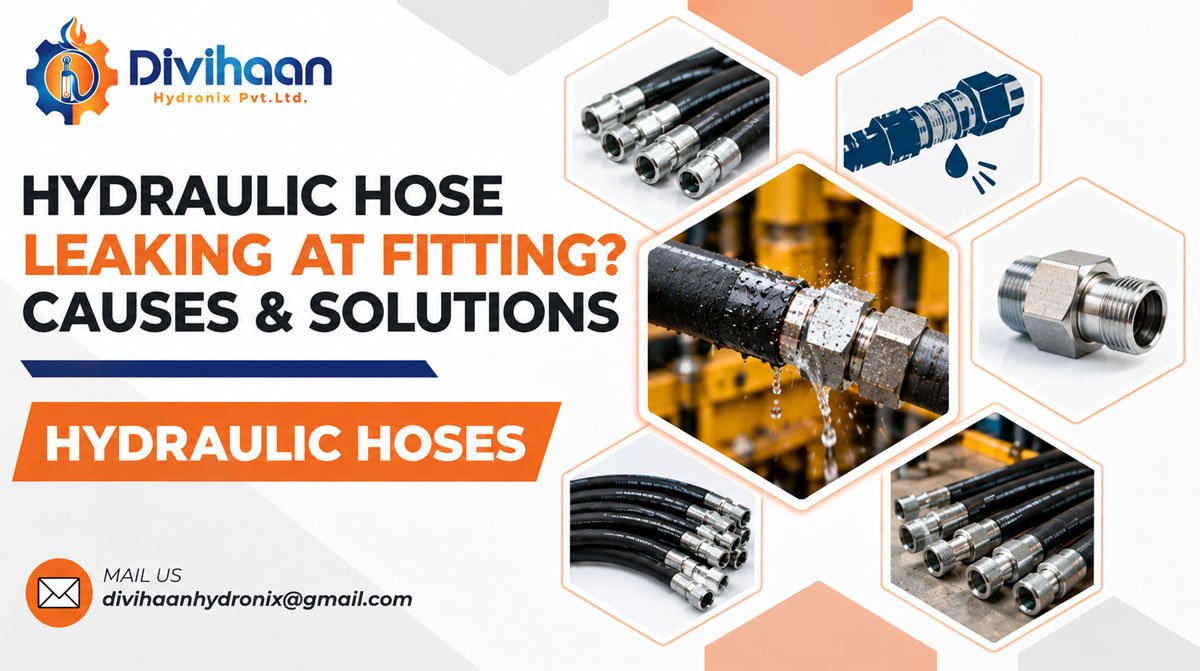
6. Incorrect or Damaged Fittings
The hose and fitting work together as a complete assembly. Incorrect fitting selection, poor assembly, corrosion, damaged connections, or improper crimping can cause leakage or separation between the hose and fitting.
Warning signs around fittings may include:
- Oil leakage
- Corrosion
- Fitting movement
- Damaged threads
- Cracks
- Hose deformation near the fitting
A hose should never be considered separately from its fittings when diagnosing a failure.
7. Hose Twisting During Installation
A hydraulic hose is designed to bend, but it should not be installed with unnecessary twist. Twisting places stress on the reinforcement layers and may reduce hose life. During installation, check that the hose follows its natural routing and that tightening fittings does not rotate or twist the hose assembly.
8. Incorrect Bend Radius
Every hydraulic hose has a specified minimum bend radius. Installing a hose in a tighter bend than recommended can stress the reinforcement and restrict the hose internally. Repeated machine movement can make the problem worse. Correct hose length and routing are therefore essential for reliable operation.
9. Hydraulic Fluid Compatibility Problems
The inner tube must be compatible with the hydraulic fluid being used. An incompatible fluid may cause the hose material to soften, swell, crack, or otherwise deteriorate. When replacing a hose, verify compatibility with the actual fluid and operating temperature rather than selecting a replacement based only on hose dimensions.
10. Age and Normal Deterioration
Hydraulic hoses do not last indefinitely. Heat cycles, pressure cycles, vibration, movement, environmental exposure, and normal material ageing can gradually reduce hose condition.
There is no single replacement interval that applies to every hydraulic system. Inspection and replacement schedules should consider operating conditions, manufacturer recommendations, service history, application severity, and the consequences of a potential failure.
What Are the Warning Signs of Hydraulic Hose Failure?
Regular hydraulic hose inspection can identify many problems before a complete burst occurs.
Watch for:
- Cracked or damaged outer cover
- Visible reinforcement
- Abrasion marks
- Oil leakage
- Kinks or flattened sections
- Hose twisting
- Blisters or bubbles
- Hard or brittle hose surfaces
- Corroded or cracked fittings
- Hose movement at the fitting
- Unusual bending near connections
A hose showing significant damage should be taken out of service and evaluated rather than waiting for complete failure.
How to Prevent a Hydraulic Hose from Bursting
Preventing hydraulic hose failure requires correct selection, installation, operation, and maintenance.
Choose the Correct Hydraulic Hose
Select a hose that meets the system’s requirements for pressure, temperature, fluid compatibility, size, routing, movement, and operating environment.
Follow Correct Hydraulic Hose Routing
Avoid sharp bends, twisting, excessive tension, and contact with abrasive or hot surfaces. Use clamps, protective sleeves, guards, and supports where appropriate.
Inspect Hydraulic Hoses Regularly
Include hoses and fittings in routine preventive maintenance. Inspection frequency should depend on the equipment, operating environment, service severity, previous failure history, and manufacturer recommendations.
Monitor System Pressure and Temperature
Abnormally high pressure or temperature can shorten hose life. If hoses repeatedly fail, investigate the hydraulic system instead of repeatedly replacing the hose.
Replace Damaged Hoses Promptly
Do not continue operating a hose with exposed reinforcement, severe abrasion, cracking, leakage, blistering, damaged fittings, or other significant deterioration. A failed high-pressure hydraulic hose should be replaced with an appropriately specified hose assembly rather than patched for continued service.
What Should You Do If a Hydraulic Hose Bursts?
Stop the equipment safely and isolate the hydraulic system according to the machine manufacturer’s procedures. Do not assume that switching off the pump immediately removes all hydraulic pressure. Pressure can remain trapped in parts of the circuit.
Never use your hand or another body part to search for a hydraulic leak. High-pressure fluid can penetrate the skin even when the leak appears very small. Only inspect, remove, or replace the failed hose after the system has been safely depressurized by trained personnel.
Why Does the Same Hydraulic Hose Keep Bursting?
Repeated hydraulic hose bursting usually indicates that the root cause has not been corrected.
Possible reasons include:
- Excessive system pressure
- Incorrect hose specification
- Poor routing
- Excessive heat
- Incorrect fittings
- Abrasion
- Hose twisting
- Pressure spikes
- Improper installation
If the same hose repeatedly fails in the same location, the entire application and hydraulic circuit should be inspected instead of treating the hose as an isolated problem.
Frequently Asked Questions About Hydraulic Hose Failure
1. What is the most common cause of hydraulic hose failure?
There is no single cause for every application. Abrasion, improper routing, excessive pressure, heat, incorrect hose selection, fitting problems, and normal deterioration are all common contributors.
2. Can high pressure cause a hydraulic hose to burst?
Yes. Operating beyond the hose’s specified working pressure or exposing it to damaging pressure spikes can overstress the hose and contribute to failure.
3. How do I know if a hydraulic hose needs replacement?
Cracking, leakage, exposed reinforcement, severe abrasion, blistering, kinking, crushing, fitting damage, or other significant deterioration are signs that the hose requires immediate attention.
4. Can a damaged hydraulic hose be repaired?
A failed high-pressure hydraulic hose assembly should generally be replaced with a correctly specified assembly rather than patched and returned to service.
5. How often should hydraulic hoses be inspected?
Inspection frequency depends on operating conditions, application severity, equipment requirements, previous service history, and manufacturer or applicable industry recommendations.
6. Why does my hydraulic hose keep leaking near the fitting?
Possible causes include incorrect assembly, damaged fittings, poor routing, excessive movement, incompatible components, hose deterioration, or excessive mechanical stress near the connection.
7. Can hydraulic hose abrasion cause bursting?
Yes. Severe abrasion can remove the protective outer cover and expose or damage the reinforcement, increasing the likelihood of hose failure.
Conclusion
A hydraulic hose burst is often the result of excessive pressure, abrasion, incorrect hose selection, poor routing, heat, damaged fittings, twisting, fluid incompatibility, or gradual deterioration. The best way to reduce unexpected hydraulic hose failure is to use correctly specified hose assemblies, install them properly, control pressure and temperature, inspect hoses regularly, and replace damaged components before they fail.
For industrial applications where hydraulic hoses repeatedly leak, wear, or burst, identifying the root cause is more effective than simply replacing the failed hose.
Need assistance with hydraulic hoses, fittings, or hydraulic system requirements? Contact Divihaan Hydronix for hydraulic hose and fitting solutions suited to your industrial application.