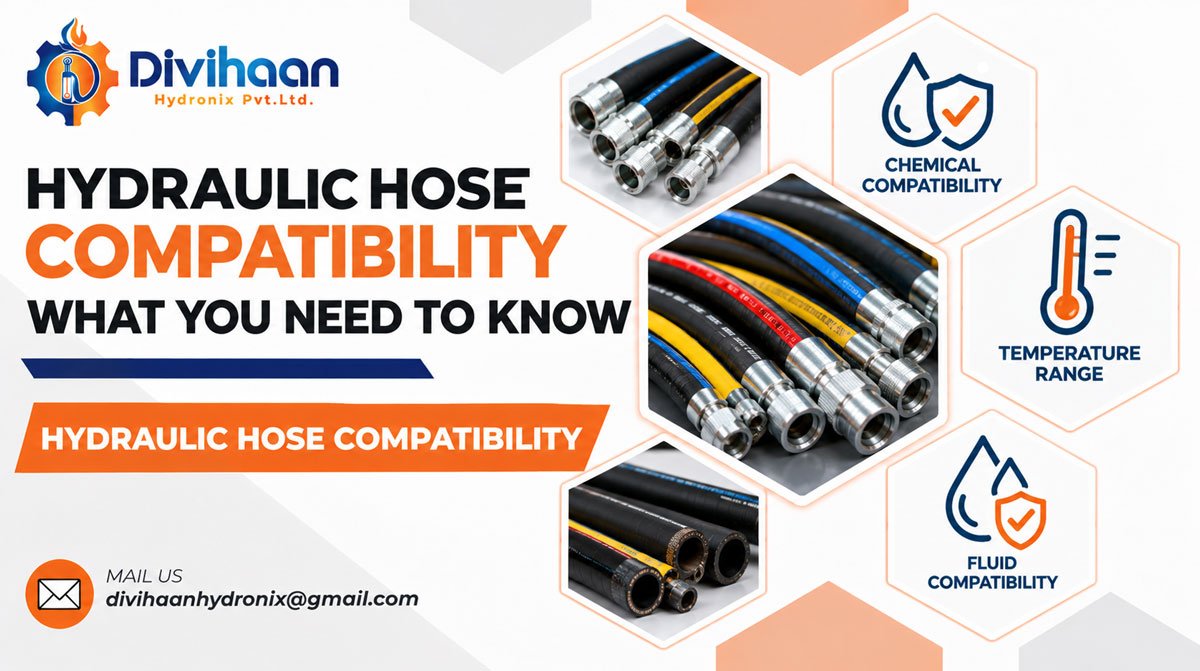
Hydraulic hose compatibility is an essential factor when selecting the right hose for hydraulic oil in industrial machinery and hydraulic systems. Different hydraulic fluids contain different base oils, additives, and chemical compounds that may react differently with hose materials. Using an incompatible hydraulic hose can cause swelling, hardening, cracking, leakage, and premature hose failure.
Choosing the correct hydraulic hose for hydraulic oil requires understanding the fluid type, hose inner tube material, operating temperature, pressure rating, and fitting compatibility.
Whether you operate hydraulic presses, construction machinery, manufacturing equipment, or industrial power units, proper hydraulic oil hose compatibility helps maintain safe and reliable equipment operation.
Quick Answer: How do you choose a hydraulic hose compatible with hydraulic oil?
To select a compatible hydraulic hose, first identify the exact hydraulic fluid and its specifications. Check the hose manufacturer’s chemical compatibility chart, confirm the inner tube and seal materials, and verify the operating pressure and temperature limits. The complete hose assembly, including fittings and O-rings, must be suitable for the hydraulic fluid and application.
What Is Hydraulic Hose Compatibility?
Hydraulic hose compatibility refers to the ability of a hose assembly to safely handle a specific hydraulic fluid without unacceptable material deterioration or loss of performance.
A hydraulic hose generally consists of three main layers:
- Inner tube: Carries the hydraulic fluid and provides the primary fluid-contact surface.
- Reinforcement layer: Provides strength to withstand internal pressure.
- Outer cover: Protects the hose against environmental and mechanical damage.
Although the inner tube is the primary component exposed to hydraulic oil, other materials can also be affected by fluid exposure, leakage, or permeation.
Therefore, hydraulic hose compatibility must be evaluated for the complete assembly rather than the inner tube alone.
Why Is Hydraulic Oil Compatibility Important for Hydraulic Hoses?
Hydraulic fluids are formulated using different base stocks and additives. Their chemical properties can affect rubber, thermoplastic, and sealing materials in different ways.
An incompatible hydraulic hose may initially function normally but deteriorate over time.
Common Problems Caused by Incompatible Hydraulic Oil
1. Inner Tube Swelling
Some fluids can cause hose materials to absorb fluid and expand. Excessive swelling may change the internal dimensions and reduce material integrity.
2. Hose Hardening and Cracking
Chemical exposure and temperature can accelerate material aging, causing the hose to become less flexible and more susceptible to cracking.
3. Hydraulic Oil Leakage
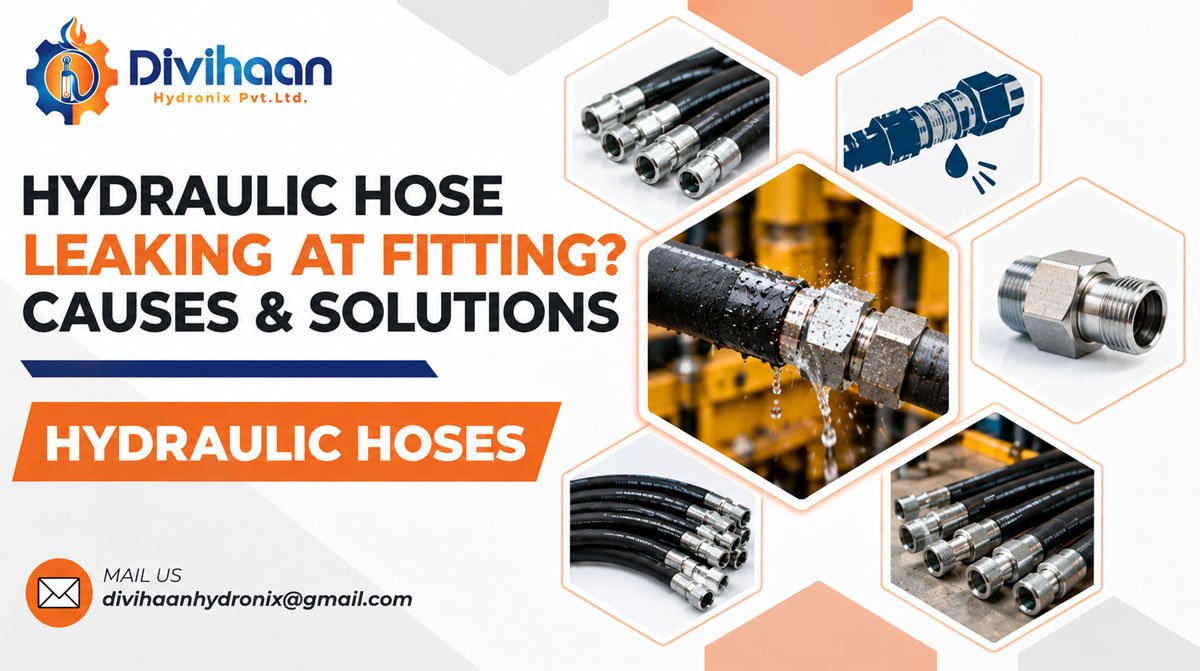
Deteriorated seals or hose materials can allow hydraulic fluid to escape from the assembly.
4. Hose Blistering
Fluid permeation or deterioration can sometimes produce blisters or abnormal swelling on the hose cover.
5. Premature Hose Failure
Continued operation with incompatible materials may contribute to leakage, reinforcement damage, or hose failure.
These effects can increase maintenance costs, equipment downtime, and workplace safety risks.
Which Hydraulic Oils Are Used in Industrial Hydraulic Systems?
Understanding the type of hydraulic oil is the first step in selecting a compatible hydraulic hose.
1. Mineral Oil-Based Hydraulic Fluids
Mineral oil-based hydraulic fluids are widely used in industrial hydraulic equipment.
They are commonly found in hydraulic presses, manufacturing machines, material-handling equipment, and construction machinery.
Many standard hydraulic hoses are designed for petroleum-based hydraulic oils.
However, compatibility must still be verified against the exact fluid formulation and hose specification.
2. Synthetic Hydraulic Fluids
Synthetic hydraulic fluids are formulated for specific performance requirements, which may include temperature stability, fire resistance, or environmental considerations.
Different synthetic fluids have significantly different chemical properties.
For example, phosphate ester fluids may require specialized hose tube and seal materials.
A hydraulic hose compatible with mineral oil should not automatically be considered suitable for phosphate ester fluid.
3. Water-Glycol Hydraulic Fluids
Water-glycol fluids are used in certain applications where fire-resistant hydraulic fluids are required.
Their water content, glycol concentration, and additives can affect hose and seal compatibility.
A hose suitable for petroleum-based hydraulic oil may not be appropriate for a water-glycol formulation.
4. Biodegradable Hydraulic Oils
Biodegradable hydraulic fluids may be based on vegetable oils or synthetic esters.
These fluids are used in applications where environmental performance is an important consideration.
Some biodegradable fluids can cause permeation, swelling, or other material compatibility issues.
Hose selection must therefore follow the manufacturer’s compatibility guidance for the specific biodegradable fluid.
Hydraulic Hose Compatibility Chart for Different Hydraulic Oils
The following table provides a general guide to compatibility considerations.
| Hydraulic fluid type | Hose compatibility considerations | Recommended approach |
| Mineral oil-based | Many conventional oil-resistant hoses are designed for these fluids | Verify exact hose and oil specifications |
| Synthetic hydrocarbon | Compatibility depends on formulation and materials | Check manufacturer compatibility chart |
| Phosphate ester | May be incompatible with common hose compounds | Use specifically approved hose materials |
| Water-glycol | Requires suitable water-glycol-resistant components | Verify tube and seal compatibility |
| Vegetable oil-based | Compatibility varies by formulation | Confirm suitability for the exact fluid |
| Synthetic ester biodegradable oil | Some formulations can affect hose materials or permeate through them | Use manufacturer-approved hose construction |
Important: This table is a selection guide, not a product-specific compatibility approval. Fluid compatibility must be confirmed using the actual hose manufacturer’s technical documentation.
How to Choose the Right Hydraulic Hose Material for Hydraulic Oil
The material used in a hydraulic hose’s inner tube plays an important role in chemical compatibility.
Nitrile Rubber (NBR) Hydraulic Hose
Nitrile rubber is commonly used in hose applications requiring resistance to petroleum-based oils.
Its performance depends on the specific compound formulation, operating temperature, and fluid additives.
NBR-based hoses may be suitable for many mineral oil hydraulic systems, but compatibility must be confirmed for the actual product.
Synthetic Rubber Hydraulic Hoses
Hydraulic hoses may use specially formulated synthetic rubber compounds to meet pressure, temperature, and fluid-resistance requirements.
The term synthetic rubber does not identify a single chemical material.
Therefore, it is important to check the actual compound and manufacturer-approved fluid compatibility.
Thermoplastic Hydraulic Hoses
Thermoplastic hydraulic hoses may be selected for applications requiring compact dimensions, flexibility, or specific chemical properties.
Different thermoplastic tube materials have different compatibility characteristics.
Some may be suitable for particular synthetic or specialized hydraulic fluids, while others may not.
PTFE Hydraulic Hoses
Polytetrafluoroethylene (PTFE) offers broad chemical resistance and may be suitable for certain specialized fluid applications.
However, PTFE hose selection must also consider pressure rating, bend radius, temperature, permeation, and fitting compatibility.
PTFE is not automatically the correct choice for every hydraulic system.
How to Check Hydraulic Hose Compatibility With Hydraulic Oil
A systematic selection process can help prevent incorrect hose selection.
Step 1: Identify the Exact Hydraulic Oil
Start by identifying the hydraulic fluid manufacturer, product name, viscosity grade, and fluid classification.
For example, ISO VG 46 identifies a viscosity grade, not the complete chemical composition of the fluid.
Two hydraulic oils with the same viscosity grade may contain different base oils or additive packages.
Step 2: Review the Hydraulic Fluid Technical Data Sheet
Check the hydraulic oil’s technical data sheet and safety data sheet for information about:
- Fluid base stock
- Operating temperature
- Viscosity characteristics
- Chemical composition information
- Material compatibility guidance
- Manufacturer recommendations
If the available documentation does not provide enough information, contact the fluid manufacturer.
Step 3: Check the Hydraulic Hose Compatibility Chart
Hydraulic hose manufacturers publish chemical resistance charts and product-specific recommendations.
These documents help identify which hose constructions are suitable for particular hydraulic fluids.
Step 4: Verify Hydraulic Hose Pressure and Temperature Ratings
Chemical compatibility alone does not establish that a hose is suitable for an application.
Check:
- Maximum system pressure, including pressure surges
- Hose assembly working pressure
- Minimum and maximum fluid temperatures
- Ambient temperature
- Hose size and required flow
- Installation bend radius
A chemically compatible hose may still fail if its operating limits are exceeded.
Step 5: Confirm Hydraulic Hose Fitting and Seal Compatibility
Fittings and sealing elements must be suitable for the selected hydraulic fluid.
For example, an O-ring material suitable for petroleum-based oil may not be appropriate for every synthetic hydraulic fluid.
Always verify the complete hose assembly’s compatibility.
Step 6: Confirm the Final Selection With the Manufacturer
When handling unusual fluids, mixed formulations, or demanding operating conditions, seek written technical confirmation from the hose assembly manufacturer.
Do not rely on visual appearance, hose colour, or generic material descriptions alone.
Can the Same Hydraulic Hose Be Used for Different Hydraulic Oils?
A single hydraulic hose may be compatible with multiple hydraulic fluids, but compatibility should never be assumed.
For example, a hose designed for mineral oil may also be approved for certain other fluids.
However, switching from mineral oil to phosphate ester or another specialized hydraulic fluid may require a different hose construction and seal material.
Before changing hydraulic oil:
- Identify the new fluid’s specifications.
- Check compatibility with the existing hose assembly.
- Verify seals, fittings, and other hydraulic components.
- Follow the equipment manufacturer’s fluid changeover procedure.
- Replace incompatible components before operating the system.
Mixing or changing hydraulic fluids without verification may affect both the hose assembly and the hydraulic equipment.
What Are the Signs of Hydraulic Hose and Oil Incompatibility?
Recognizing potential compatibility problems helps maintenance teams identify developing failures.
Hydraulic Hose Swelling
Unusual swelling may indicate fluid absorption, chemical interaction, or other internal deterioration.
Hose Hardening or Loss of Flexibility
A hose that becomes unusually stiff may have experienced material aging, thermal damage, or chemical incompatibility.
Cracks on the Hose Surface
Visible cracking can indicate environmental deterioration, excessive bending, temperature exposure, or material degradation.
Blisters on the Hose Cover
Blisters may develop because of fluid permeation or other hose damage.
Repeated Hydraulic Oil Leakage
Recurring leakage around hose connections may indicate damaged seals, incorrect assembly, or material compatibility problems.
These symptoms are not unique to chemical incompatibility. A qualified technician should inspect the system to identify the actual cause.
Safety note: Never touch a suspected high-pressure leak or attempt to inspect a hose while it is pressurized. Hydraulic fluid injection injuries require immediate emergency medical attention.
Common Mistakes to Avoid When Selecting Hydraulic Hoses for Oil Compatibility
Assuming All Hydraulic Oils Are Similar
Hydraulic fluids can differ significantly in their chemical composition.
Compatibility should be checked for the specific formulation.
Choosing a Hose Based Only on Pressure Rating
A high-pressure rating does not guarantee resistance to every hydraulic oil.
Ignoring Hydraulic Fluid Additives
Fluid additives may influence material compatibility, particularly under demanding temperature conditions.
Reusing an Old Hose With a New Fluid
A previously installed hose may not be suitable for a different hydraulic oil.
Ignoring O-Ring and Fitting Compatibility
Even when the hose tube is suitable, incompatible seals may deteriorate and cause leakage.
Relying Only on Generic Compatibility Charts
General chemical compatibility charts are useful for initial screening but should not replace product-specific technical approval.
How Does Hydraulic Hose Compatibility Affect Equipment Performance?
Correct hydraulic hose compatibility helps maintain reliable fluid transfer and reduce avoidable maintenance problems.
When hose materials are suitable for the hydraulic oil and operating conditions, the risk of chemical deterioration is reduced.
Proper hose selection can help:
- Minimize premature material deterioration
- Reduce fluid leakage risks
- Support predictable maintenance planning
- Reduce avoidable equipment downtime
- Maintain safe operating conditions
- Improve the reliability of hydraulic connections
However, compatibility is only one aspect of hydraulic hose performance.
Correct installation, contamination control, pressure management, and routine inspection remain essential.
Frequently Asked Questions About Hydraulic Hose Compatibility
1. What is hydraulic hose compatibility?
Hydraulic hose compatibility is the suitability of a hose assembly for a particular hydraulic fluid and operating environment. It includes the chemical resistance of the inner tube, seals, fittings, and other exposed materials.
2. Which hydraulic hose material is best for mineral hydraulic oil?
Many hydraulic hoses using suitable nitrile-based inner tubes are designed for mineral oil applications. However, the correct material depends on the exact hydraulic oil, pressure, temperature, and manufacturer specifications.
3. Can I use the same hydraulic hose for mineral and synthetic oil?
Possibly, but only if the hose manufacturer approves both fluids. Synthetic hydraulic fluids vary significantly, and some require specialized hose and seal materials.
4. Is ISO VG 46 hydraulic oil compatible with all hydraulic hoses?
No. ISO VG 46 indicates a viscosity grade, not a universal chemical formulation. Compatibility depends on the fluid’s base stock, additives, and the hose material.
5. What happens if hydraulic oil is incompatible with a hose?
Incompatible hydraulic oil may cause swelling, hardening, cracking, permeation, leakage, or premature deterioration of the hose assembly.
6. Are rubber hydraulic hoses compatible with biodegradable oils?
Some rubber hydraulic hoses are compatible with certain biodegradable oils, but compatibility depends on the hose compound and fluid formulation. Synthetic ester fluids may require additional verification.
7. How do I check hydraulic hose compatibility?
Identify the exact fluid, review the hose manufacturer’s compatibility chart, verify the operating pressure and temperature, and confirm that all hose assembly components are approved for the application.
8. Can incompatible hydraulic oil damage hose fittings?
Yes. Incompatible fluid can deteriorate elastomeric seals and may affect certain fitting materials or protective components. Compatibility should be verified for the complete assembly.
9. Does hydraulic oil temperature affect hose compatibility?
Yes. Chemical compatibility can change with temperature. A hose material that performs adequately at moderate temperatures may deteriorate faster when exposed to higher temperatures.
10. How often should hydraulic hoses be inspected for compatibility-related damage?
Inspection intervals should follow the equipment manufacturer’s recommendations and consider operating conditions, fluid type, temperature, and equipment criticality. Any signs of swelling, cracking, leakage, or abnormal deterioration require prompt assessment.
Conclusion: Choose the Right Hydraulic Hose for Your Hydraulic Oil
Hydraulic hose compatibility is an important consideration when selecting hoses for industrial hydraulic systems.
Different hydraulic oils can affect hose materials in different ways, making it essential to verify the compatibility of the inner tube, seals, fittings, and complete assembly.
Mineral oil, synthetic hydraulic fluids, water-glycol solutions, and biodegradable oils each have distinct compatibility requirements.
By reviewing manufacturer specifications, checking hydraulic fluid properties, and confirming operating conditions, maintenance teams can make better hose selection decisions and reduce preventable failures.
Need Help Choosing the Right Hydraulic Hose for Your Application?
Choosing a hydraulic hose involves understanding hydraulic fluid compatibility, pressure requirements, temperature limits, and fitting specifications.
For information about hydraulic components and industrial hydraulic applications, connect with Divihaan Hydronix.
Visit www.divihaan.com to learn more and discuss your hydraulic requirements.