Choosing the right hydraulic hose for high-pressure applications is essential for maintaining hydraulic system safety, efficiency, and reliability. Industrial hydraulic systems operate under demanding conditions involving high fluid pressure, temperature fluctuations, vibration, and continuous mechanical movement. Selecting an unsuitable hydraulic hose can increase the risk of fluid leakage, pressure loss, premature hose failure, and unexpected equipment downtime.
A suitable high-pressure hydraulic hose must be selected according to its working pressure rating, internal diameter, reinforcement construction, temperature limits, fluid compatibility, bend radius, and fitting specifications.
Whether the application involves hydraulic presses, construction equipment, manufacturing machinery, or heavy-duty industrial systems, understanding these factors helps maintenance teams make informed hose selection decisions.
Quick Answer: How do you choose the right hydraulic hose for high-pressure applications?
To choose a hydraulic hose for high-pressure applications, determine the maximum system pressure, including pressure surges, and select a compatible hose assembly with an adequate working pressure rating. Then verify the hose diameter, temperature range, fluid compatibility, reinforcement type, minimum bend radius, fitting specifications, and applicable industry standards.
Why Is Choosing the Right High-Pressure Hydraulic Hose Important?
A hydraulic hose transfers pressurized hydraulic fluid between components such as pumps, valves, cylinders, and hydraulic motors.
In high-pressure hydraulic systems, hoses must withstand internal pressure while accommodating equipment movement and operating conditions.
Incorrect hydraulic hose selection can create several problems:
- Hydraulic fluid leakage and contamination
- Premature hose wear or rupture
- Excessive pressure drop
- Increased heat generation
- Reduced equipment reliability
- Unplanned maintenance and downtime
- High-pressure fluid injection hazards
A properly selected hydraulic hose helps maintain fluid transfer performance and reduces avoidable mechanical stress.
However, a hose with a high pressure rating is not automatically suitable for every application. Its materials, dimensions, fittings, and installation conditions must also match the hydraulic system.
What Factors Should You Consider When Selecting a Hydraulic Hose?
Hydraulic hose selection should begin with understanding the actual operating conditions.
A useful industry approach is the STAMPED method, which considers Size, Temperature, Application, Media, Pressure, Ends, and Delivery.
This framework helps technicians and engineers review the major factors affecting hose suitability.
1. Check the Hydraulic Hose Working Pressure Rating
Working pressure is one of the most important factors when selecting a hydraulic hose for high-pressure applications.
The maximum working pressure rating indicates the pressure at which the hose or complete assembly is designed to operate under specified conditions.
The selected assembly must have a working pressure rating equal to or greater than the maximum pressure it will encounter, including applicable pressure surges.
Working Pressure vs Burst Pressure in Hydraulic Hoses
These two pressure ratings serve different purposes.
| Parameter | Working pressure | Burst pressure |
| Meaning | Maximum rated operating pressure | Pressure associated with destructive failure testing |
| Purpose | Hose selection and normal operation | Design verification and safety assessment |
| Suitable for continuous operation? | Within rated conditions | No |
| Selection priority | Primary operating requirement | Not a substitute for working pressure |
For example, a hydraulic hose rated for a working pressure of 350 bar may have a minimum burst pressure of 1,400 bar if designed with a 4:1 ratio.
However, this does not mean the hose can safely operate at 1,400 bar.
The actual design factor depends on the hose type, applicable standard, and manufacturer specifications.
Important: The working pressure rating of the complete hose assembly is limited by its lowest-rated component, including fittings and couplings.
2. Choose the Correct Hydraulic Hose Diameter
Hydraulic hose diameter affects fluid velocity, pressure loss, and overall system performance.
The internal diameter (ID) determines the available flow area inside the hose.
If the hose diameter is too small, fluid velocity increases and may create excessive pressure drop and heat generation.
An unnecessarily large hose may increase cost, weight, and installation space.
How to Determine Hydraulic Hose Size
Hose size selection should consider:
- Required hydraulic fluid flow rate
- Acceptable fluid velocity
- Hose length
- Hydraulic fluid viscosity
- Allowable pressure drop
- Available installation space
Manufacturers commonly identify hydraulic hose sizes using dash numbers.
For many conventional hydraulic hose series, a dash number represents the nominal inside diameter in sixteenths of an inch.
For example:
| Dash size | Nominal inside diameter |
| -4 | 1/4 inch |
| -6 | 3/8 inch |
| -8 | 1/2 inch |
| -12 | 3/4 inch |
| -16 | 1 inch |
Some hose families use different sizing conventions, so always verify the actual dimensions in the manufacturer’s specifications.
Selecting the correct internal diameter helps control fluid velocity and pressure loss.
3. Understand Hydraulic Hose Reinforcement Types
High-pressure hydraulic hoses contain reinforcement layers that help resist internal pressure.
Different reinforcement constructions provide different pressure capabilities, flexibility, and fatigue performance.
Wire-Braided Hydraulic Hoses
Wire-braided hoses use one or more layers of braided steel wire reinforcement.
They are commonly used in industrial hydraulic systems where suitable pressure capacity and routing flexibility are required.
Typical applications include hydraulic machinery, material-handling equipment, and mobile hydraulic systems.
Spiral Wire-Reinforced Hydraulic Hoses
Spiral wire-reinforced hoses use multiple layers of spirally arranged steel wire.
These hoses are frequently considered for demanding high-pressure applications involving severe pressure impulses and mechanical loads.
However, spiral reinforcement is not automatically superior in every application. The appropriate choice depends on the manufacturer’s verified performance ratings and the system’s operating conditions.
Thermoplastic Hydraulic Hoses
Thermoplastic hoses may be suitable for selected hydraulic applications where low weight, compact dimensions, or specific chemical properties are important.
Their suitability for high pressure depends on the exact hose construction and published ratings.
Selection tip: Compare verified pressure ratings, impulse performance, bend radius, and application compatibility rather than choosing a hose based only on reinforcement type.
4. Verify Hydraulic Hose Temperature Ratings
Hydraulic hoses operate in environments where both hydraulic fluid temperature and ambient temperature can affect performance.
Excessive temperature may accelerate deterioration of the hose tube, cover, and sealing materials.
Very low temperatures can also affect flexibility and material behavior.
What Happens When Hydraulic Hose Temperature Limits Are Exceeded?
Potential consequences include:
- Hardening or cracking of hose materials
- Reduced flexibility
- Seal deterioration
- Premature hose aging
- Increased risk of leakage or failure
Some hydraulic hose products are rated for temperatures around -40°C to +100°C, but this is not a universal range.
Actual temperature limits depend on the hose construction, hydraulic fluid, and manufacturer.
Always verify the operating temperature limits for the complete application.
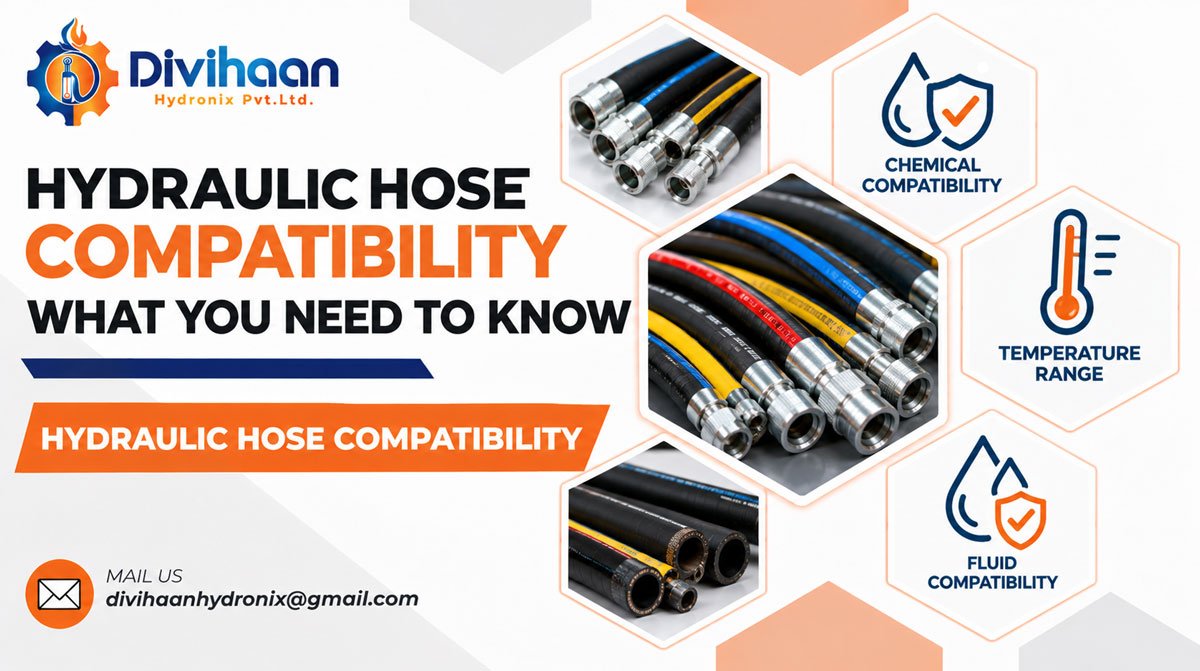
5. Check Hydraulic Fluid Compatibility
Hydraulic hoses must be compatible with the fluids they carry.
Different hydraulic systems may use petroleum-based oils, water-glycol fluids, phosphate ester fluids, or biodegradable hydraulic fluids.
A hose suitable for one fluid may not be compatible with another.
Why Is Hydraulic Fluid Compatibility Important?
Incompatible hydraulic fluid can damage the inner tube or sealing materials.
Possible effects include swelling, softening, hardening, cracking, and reduced service life.
When choosing a hydraulic hose, check compatibility with:
- The hose inner tube
- Fitting and seal materials
- Operating temperature
- Fluid additives
- Fluid concentration and composition
Use the manufacturer’s chemical compatibility information and seek technical confirmation for unusual fluids.
6. Consider Hydraulic Hose Bend Radius and Flexibility
The minimum bend radius indicates how tightly a hose can be bent without exceeding its specified design limits.
Installing a hose below its minimum bend radius can damage the reinforcement and increase the risk of premature failure.
Why Does Hydraulic Hose Bend Radius Matter?
Excessive bending may cause:
- Reinforcement fatigue
- Hose kinking
- Restricted fluid flow
- Stress near the fitting
- Reduced hose service life
For high-pressure applications, hose routing should accommodate normal equipment movement without twisting, stretching, or sharply bending the hose.
A compact installation does not justify exceeding the manufacturer’s minimum bend radius.
7. Select Compatible Hydraulic Hose Fittings
Hydraulic hose fittings connect the hose assembly to hydraulic components.
The fitting must be compatible with the hose, connection port, hydraulic fluid, and operating pressure.
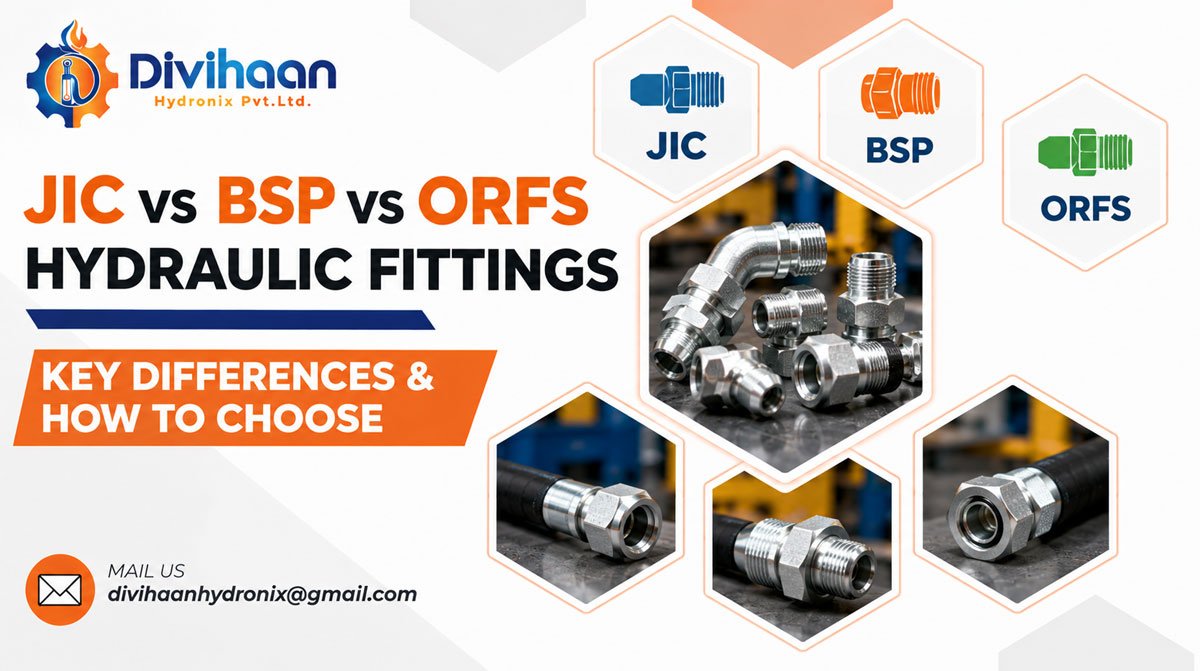
Common hydraulic fitting designs include:
- BSP connections
- JIC 37-degree flare fittings
- ORFS fittings
- Metric hydraulic connections
- NPT connections
Similar-looking fittings may use different sealing methods and are not necessarily interchangeable.
How to Choose the Right Hydraulic Hose Fittings
Verify the fitting thread, size, sealing design, pressure rating, material, and approved hose compatibility.
For crimped assemblies, use the hose manufacturer’s approved fitting and crimping specifications.
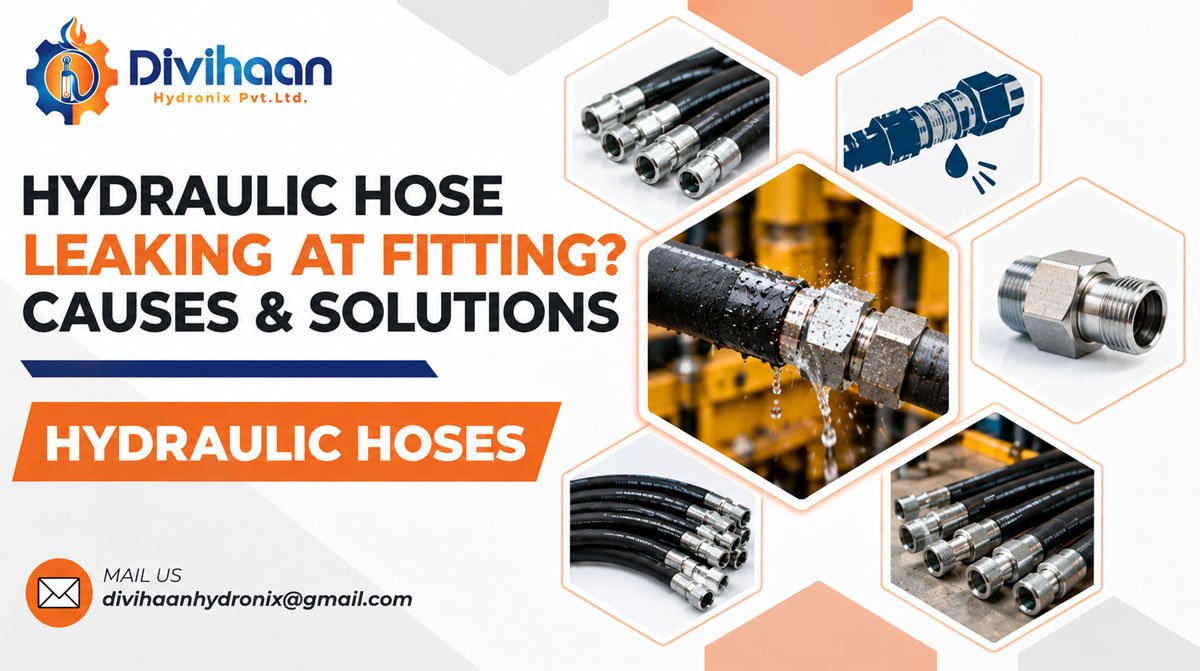
Incorrect combinations can cause leakage or fitting separation under pressure.
8. Evaluate the Hydraulic Hose Operating Environment
A high-pressure hydraulic hose may face mechanical and environmental conditions beyond internal pressure.
Consider exposure to:
- Abrasion against machine surfaces
- Continuous vibration
- Outdoor weather conditions
- UV radiation and ozone
- Chemicals and industrial fluids
- High external temperatures
- Repeated bending and movement
For applications involving severe abrasion, a hose with a suitable abrasion-resistant cover or approved protective sleeve may be beneficial.
For areas exposed to high temperatures, additional thermal protection may be necessary.
Protective accessories must not interfere with hose inspection or conceal developing damage.
9. Check Hydraulic Hose Standards and Specifications
Hydraulic hose standards provide a framework for construction, dimensions, pressure performance, and testing.
Commonly referenced standards include:
| Standard | General relevance |
| SAE J517 | Hydraulic hose specifications, including SAE 100R families |
| EN 853 | Certain wire-braided rubber hydraulic hoses |
| EN 856 | Certain spiral wire-reinforced hydraulic hoses |
| EN 857 | Compact wire-braided hydraulic hoses |
| ISO 18752 | Performance-based hydraulic hose specifications |
| ISO 4413 | General rules and safety requirements for hydraulic fluid power systems |
A standard designation alone does not establish suitability for a specific machine.
Always verify the applicable edition, hose size, working pressure, temperature limits, and manufacturer-approved assembly specifications.
Which Hydraulic Hose Is Best for High-Pressure Applications?
There is no single hydraulic hose type that is best for every high-pressure system.
The correct choice depends on operating pressure, pressure impulse frequency, fluid type, installation space, temperature, and machine movement.
| Application condition | Hose characteristics to prioritize |
| High operating pressure | Verified high working-pressure rating |
| Frequent pressure impulses | Suitable impulse and fatigue performance |
| Tight installation space | Appropriate minimum bend radius |
| High-temperature environment | Suitable temperature-rated construction |
| Abrasive surroundings | Abrasion-resistant cover or protection |
| Repeated machine movement | Flexibility and fatigue resistance |
| Specialized hydraulic fluids | Verified fluid and seal compatibility |
For severe-duty equipment, spiral wire-reinforced hoses may be appropriate, but properly rated braided or other constructions may also meet the application requirements.
Common Mistakes to Avoid When Choosing a High-Pressure Hydraulic Hose
Incorrect hydraulic hose selection often results from overlooking one or more operating requirements.
Choosing a Hose Based Only on Pressure Rating
A high pressure rating does not guarantee suitable fluid compatibility, flexibility, or temperature resistance.
Ignoring Pressure Spikes
Hydraulic systems may experience transient pressure surges above their normal operating pressure.
These conditions must be evaluated when specifying the hose assembly.
Using Incorrect Hose and Fitting Combinations
Incompatible components can create serious connection failures.
Always use verified compatible hose and fitting systems.
Selecting the Wrong Hose Diameter
Undersized hoses may increase pressure loss and fluid heating.
Oversized hoses may increase cost and complicate routing.
Ignoring Minimum Bend Radius
Tight bends can damage reinforcement and shorten hose life.
Reusing Damaged Hydraulic Hose Assemblies
A hose showing reinforcement exposure, leakage, severe kinking, or other significant damage should be removed from service and assessed for replacement.
How to Select a High-Pressure Hydraulic Hose: Step-by-Step Checklist
Before purchasing or replacing a hydraulic hose, maintenance teams can use the following checklist.
Hydraulic Hose Selection Checklist
0 of 9 completed
Reset
Identify maximum operating pressure and pressure spikes
Determine required fluid flow and hose diameter
Verify hydraulic fluid compatibility
Check fluid and ambient temperature limits
Select suitable hose reinforcement and impulse performance
Confirm minimum bend radius and hose length
Verify fitting compatibility and assembly pressure rating
Review environmental conditions and applicable standards
Confirm approved assembly, testing and inspection requirements
Copy checklist
This checklist helps organize the selection process, but final hose specifications should be confirmed by a qualified hydraulic professional or the hose assembly manufacturer.
How Does Correct Hydraulic Hose Selection Improve Equipment Reliability?
Choosing a suitable hydraulic hose can support reliable equipment operation by reducing avoidable stress on hydraulic connections and components.
Correct hose sizing helps control fluid velocity and pressure loss.
Appropriate reinforcement and pressure ratings help the assembly withstand its specified operating conditions.
Proper routing reduces unnecessary bending, twisting, and abrasion.
Fluid-compatible materials help prevent premature deterioration.
Together, these practices can reduce preventable failures and support more predictable maintenance planning.
However, hydraulic hose selection should always be combined with routine inspections, correct installation, and appropriate hydraulic system maintenance.
Frequently Asked Questions About High-Pressure Hydraulic Hoses
1. What is the best hydraulic hose for high-pressure applications?
The best hydraulic hose is one whose complete assembly meets the application’s maximum pressure, temperature, fluid compatibility, flow, and routing requirements. Wire-braided and spiral wire-reinforced hoses are commonly used, depending on the required performance.
2. How do I determine the correct pressure rating for a hydraulic hose?
Identify the maximum pressure the hose will experience, including pressure spikes. Choose a complete hose assembly with a verified working pressure rating equal to or greater than that requirement, while accounting for manufacturer limitations.
3. What is the difference between braided and spiral hydraulic hoses?
Braided hydraulic hoses use woven reinforcement layers, while spiral hoses use helically arranged reinforcement. Spiral designs are frequently used for demanding pressure and impulse applications, but the actual performance depends on the specific product.
4. Can I use a hydraulic hose with a higher pressure rating than required?
Yes, provided the hose assembly also meets the application’s other requirements, including diameter, temperature, fluid compatibility, flexibility, and fittings. A higher pressure rating alone does not guarantee better performance.
5. How do I choose the correct hydraulic hose size?
Determine the required fluid flow, acceptable velocity, pressure drop, hose length, and installation conditions. Use manufacturer sizing charts or engineering calculations to select the appropriate internal diameter.
6. What is the difference between hydraulic hose working pressure and burst pressure?
Working pressure is the maximum rated operating pressure under specified conditions. Burst pressure is associated with destructive testing and must never be treated as an allowable operating pressure.
7. Which hydraulic hose is suitable for heavy industrial machinery?
Heavy industrial machinery may require wire-braided, spiral wire-reinforced, or other specialized hydraulic hoses. The selection should reflect system pressure, vibration, movement, temperature, fluid type, and the equipment manufacturer’s specifications.
8. Does hydraulic hose length affect pressure loss?
Yes. Hose length contributes to fluid friction and pressure loss. Longer hoses can increase pressure drop, particularly when combined with small internal diameters or high flow rates.
9. How long does a high-pressure hydraulic hose last?
Hydraulic hose service life varies with operating pressure, temperature, fluid compatibility, installation, environmental exposure, and maintenance. There is no universal replacement interval suitable for every hydraulic system.
10. Can hydraulic hose fittings affect the pressure rating?
Yes. The maximum working pressure of a complete hose assembly is limited by the lowest-rated applicable component. Fittings, adapters, and couplings must be suitable for the intended pressure and service conditions.
Conclusion: Choose the Right Hydraulic Hose for Safe and Reliable Operation
Selecting the right hydraulic hose for high-pressure applications requires more than comparing pressure ratings.
Working pressure, hose diameter, reinforcement construction, temperature resistance, hydraulic fluid compatibility, bend radius, fitting selection, and operating conditions all influence the suitability of a hose assembly.
A systematic selection process helps industrial maintenance teams reduce avoidable hydraulic hose failures, improve equipment reliability, and support safer operation.
By following manufacturer specifications, applicable standards, and proper maintenance procedures, businesses can make better decisions about high-pressure hydraulic hose selection.
Looking for Hydraulic Hose Guidance for Your Industrial Application?
Divihaan Hydronix understands the importance of reliable hydraulic components in demanding industrial environments.
Whether you are reviewing hydraulic hose specifications, planning equipment maintenance, or evaluating hose requirements for high-pressure machinery, selecting compatible components is essential.
Visit www.divihaan.com to explore Divihaan Hydronix and discuss your hydraulic application requirements.