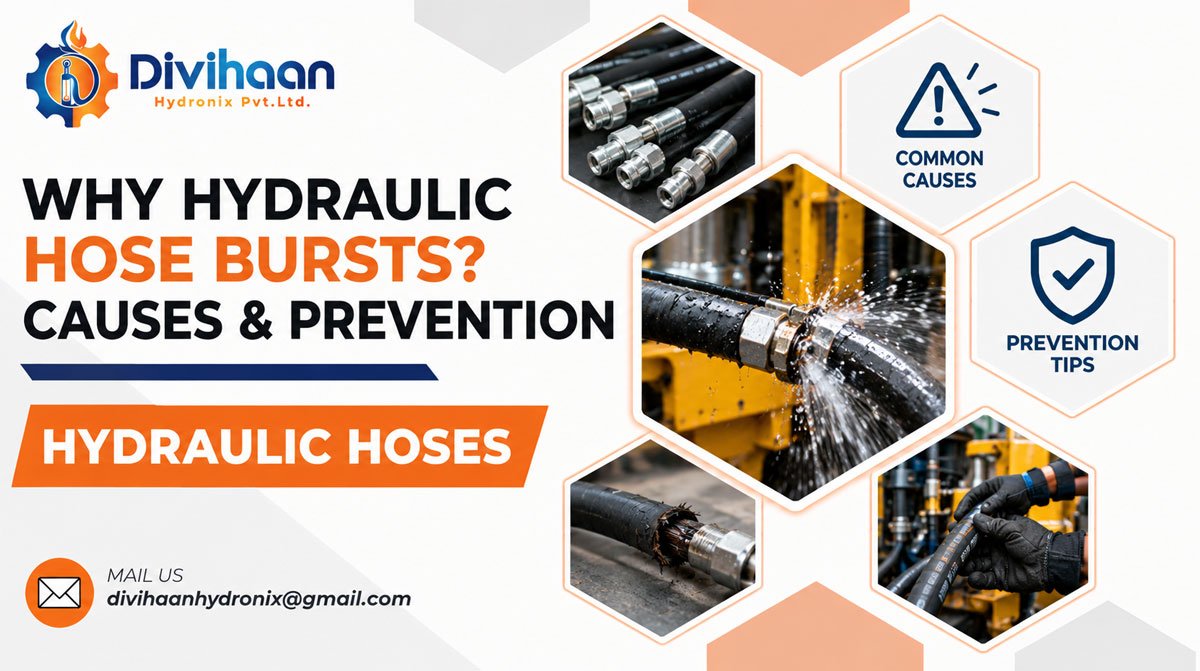
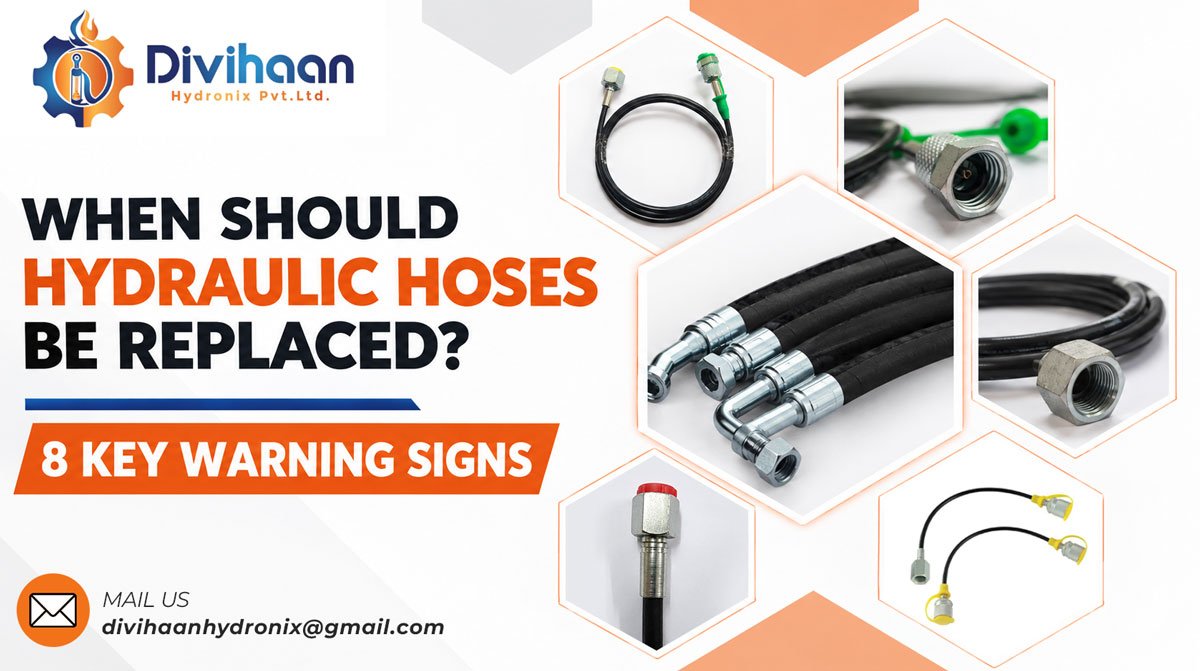
Hydraulic hoses should be replaced when they show signs such as leaks, cracks, severe abrasion, exposed reinforcement, blistering, kinks, crushing, heat damage, or damaged fittings. Even if a hose appears functional, its condition, operating environment, service history, and manufacturer recommendations should determine when hydraulic hose replacement is necessary.
Waiting until a hydraulic hose bursts can lead to sudden fluid loss, equipment downtime, component damage, and serious safety risks. Regular hydraulic hose inspection helps maintenance teams identify deterioration early and replace hoses before failure occurs.
Why Is Timely Hydraulic Hose Replacement Important?
Hydraulic hoses transport fluid under pressure between pumps, valves, cylinders, motors, and other components. During operation, hoses may be exposed to pressure cycles, vibration, heat, movement, chemicals, abrasion, and environmental conditions.
Over time, these factors can affect the hose cover, reinforcement, inner tube, and fittings.
Replacing a deteriorated hose before it fails can help:
- Reduce unexpected machine downtime
- Prevent hydraulic fluid leakage
- Protect nearby components
- Reduce contamination
- Improve system reliability
- Lower the risk associated with sudden hose failure
The objective of preventive maintenance should therefore be to identify deterioration before the hose reaches the point of failure.
What Are the Key Signs a Hydraulic Hose Needs Replacement?
Some hose problems are clearly visible, while others may develop internally. The following warning signs should never be ignored.
1. Cracks or Cuts on the Hydraulic Hose
Visible cracks, cuts, or deep surface damage can indicate that the outer hose cover has deteriorated.
Cracking may develop because of:
- Ageing
- Excessive heat
- Environmental exposure
- Flexing
- Chemical exposure
- Mechanical damage
Small superficial marks do not necessarily indicate the same level of damage as deep cuts. However, damage that reaches or exposes the reinforcement requires immediate attention.
2. Severe Abrasion or Exposed Reinforcement
Abrasion occurs when a hydraulic hose repeatedly rubs against another hose, machine frame, bracket, or other surface.
If abrasion wears through the protective outer cover and exposes the wire or textile reinforcement, the hose assembly should be removed from service.
What Causes Hydraulic Hose Abrasion?
Common causes include poor routing, insufficient clamping, vibration, contact with sharp surfaces, and hoses rubbing against each other.
When replacing an abraded hose, correct the routing or contact point as well. Otherwise, the replacement hose may develop the same problem.
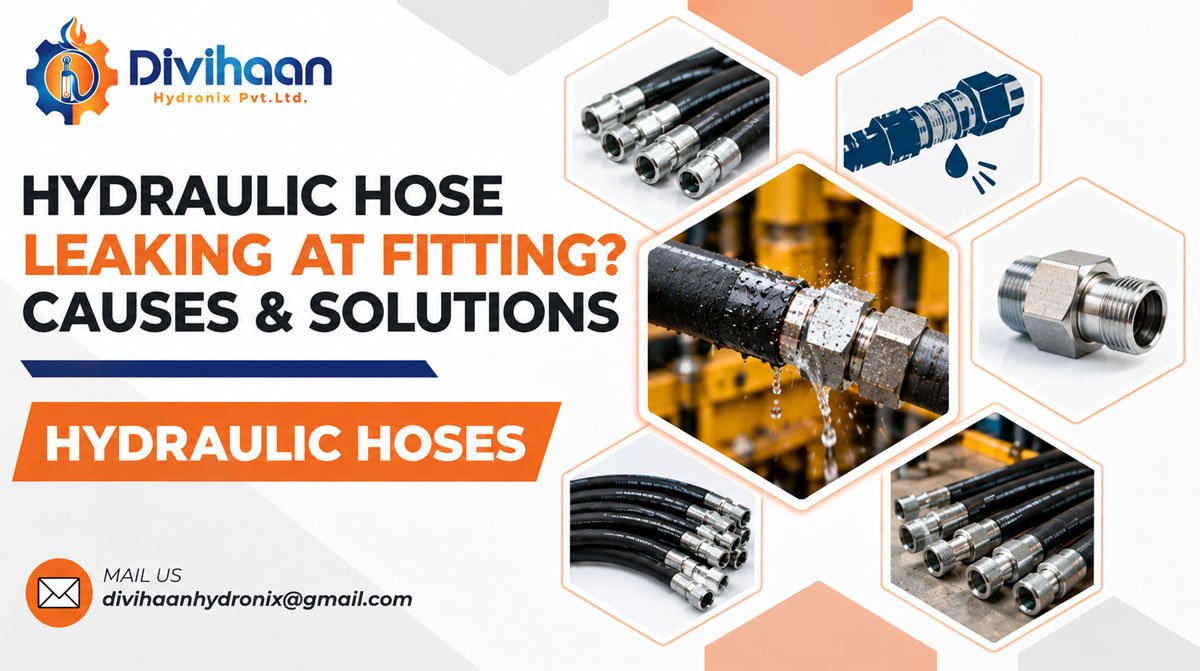
3. Hydraulic Fluid Leaks
Any visible leak from the hose or hose-fitting connection requires investigation.
Leaks can indicate:
- Hose deterioration
- Cracks or pinholes
- Fitting problems
- Incorrect assembly
- Seal or connection issues
- Excessive mechanical stress
Do not run your hand over a hose to locate a suspected leak. High-pressure hydraulic fluid can penetrate the skin and cause serious injury.
A leaking hydraulic hose assembly should be safely depressurized and inspected by trained personnel.
4. Bulges or Blisters on the Hose
A bulge, bubble, or blister on the hose surface is a significant hydraulic hose warning sign. Blistering can indicate deterioration or separation within the hose structure. Continuing to operate the equipment can increase the risk of sudden failure. A blistered or degraded hose should be removed from service rather than monitored until it starts leaking.
5. Kinked, Crushed or Flattened Hydraulic Hose
Hydraulic hoses are designed to bend within specified limits, but they are not designed to operate while severely kinked, crushed, or flattened. These conditions can affect fluid flow and damage the internal structure or reinforcement.
When Should a Bent Hydraulic Hose Be Replaced?
A normal bend within the manufacturer’s specified minimum bend radius is acceptable. A hose that has become permanently kinked, crushed, sharply folded, or structurally deformed requires attention and may need immediate replacement. The installation should also be corrected so the new hose does not experience the same stress.
6. Hose Has Become Hard, Stiff or Brittle
A hydraulic hose that has lost flexibility may have been affected by ageing or excessive temperature.
Heat can accelerate deterioration of hose materials. Over time, the hose may become:
- Hard
- Stiff
- Brittle
- Cracked
- Heat-damaged
This is particularly important where hydraulic hoses operate close to engines, exhaust systems, furnaces, or other high-temperature equipment.
Replace significantly heat-damaged hoses and investigate whether routing, shielding, or a different hose specification is required.
7. Damaged or Corroded Hydraulic Fittings
A hydraulic hose inspection should include fittings as well as the hose itself.
Look for:
- Cracks
- Heavy corrosion
- Fluid leakage
- Physical damage
- Fitting movement or slippage
- Damaged connections
The hose and fitting function as one assembly. A hose that appears acceptable may still require replacement if its fitting is damaged or has moved.
8. Twisted Hydraulic Hose
Twisting can place unnecessary stress on the hose reinforcement. A twisted hose may occur because of incorrect installation, improper fitting orientation, machine movement, or poor routing. Check the hose’s layline or markings where available. If they spiral unnaturally along the hose, this may indicate that the hose has been installed with twist. A severely twisted or damaged hose assembly should be replaced, and its routing should be corrected.
How Often Should Hydraulic Hoses Be Replaced?
There is no single replacement interval suitable for every hydraulic hose.
Hydraulic hose lifespan depends on factors including:
- Application severity
- Operating pressure
- Temperature
- Frequency of equipment use
- Pressure cycling
- Flexing and movement
- Abrasion exposure
- Hydraulic fluid compatibility
- Environmental conditions
- Installation quality
- Previous hose performance
For this reason, hydraulic hoses should be managed using manufacturer recommendations, equipment requirements, service history, applicable industry requirements, and regular condition-based inspections.
A hose used in severe operating conditions may require replacement much earlier than an equivalent hose operating in a clean, controlled environment.
Should Hydraulic Hoses Be Replaced Even If They Are Not Leaking?
Potentially, yes. Waiting for leakage is not a reliable maintenance strategy. Some forms of hose deterioration may develop before visible fluid leakage appears. A hose may require replacement because of exposed reinforcement, severe abrasion, blistering, heat damage, fitting deterioration, crushing, kinking, or other structural damage even if it is not currently leaking. This is why visual inspection is an important part of preventive hydraulic hose maintenance.
How to Inspect Hydraulic Hoses for Replacement
A systematic hydraulic hose inspection should examine the entire assembly rather than only the middle section of the hose.
Check the Hose Cover
Look for cuts, cracks, abrasion, blistering, heat damage, exposed reinforcement, and other deterioration.
Check Hose Routing
Identify sharp bends, twisting, tension, contact with moving parts, and areas where hoses rub against nearby surfaces.
Inspect Hydraulic Fittings
Check for leakage, corrosion, cracking, physical damage, or movement between the hose and fitting.
Check the Operating Environment
Look for excessive heat, chemicals, sharp edges, vibration, and other conditions that could shorten hose life.
Review Previous Hose Failures
If the same hose repeatedly fails in the same location, investigate the root cause rather than continuing to install identical replacements.
Can a Damaged Hydraulic Hose Be Repaired?
A failed high-pressure hydraulic hose assembly should not simply be patched and returned to normal operation. Once a hose assembly has failed, it should be safely removed and replaced with an appropriately specified assembly. The replacement must meet the application’s requirements for pressure, temperature, size, fluid compatibility, routing, fittings, and operating environment.
How Can You Extend Hydraulic Hose Service Life?
Good maintenance can help prevent premature hydraulic hose replacement. Use the correct hose specification, maintain proper routing, avoid twisting, respect minimum bend radius, prevent abrasion, control hydraulic system temperature, maintain correct pressure, inspect fittings, control contamination, and conduct regular inspections. Maintenance records can also help identify hoses that repeatedly deteriorate faster than expected.
Safety Precautions During Hydraulic Hose Inspection
Hydraulic systems can retain pressure even after equipment is switched off. Before inspecting, removing, or replacing a hose, follow the equipment manufacturer’s isolation and depressurization procedures. Never use your hands or other body parts to search for hydraulic leaks. A small pinhole can release a high-pressure fluid jet capable of penetrating the skin. Only trained personnel should inspect or replace hydraulic hose assemblies where hazardous stored pressure may be present.
FAQs About Hydraulic Hose Replacement
1. What are the main signs that a hydraulic hose needs replacing?
Leaks, exposed reinforcement, severe abrasion, cracking, blistering, heat damage, kinks, crushing, twisting, and damaged or slipping fittings are important warning signs.
2. How long does a hydraulic hose normally last?
There is no universal lifespan. Hose life depends on application severity, operating conditions, usage, pressure and temperature cycles, installation, maintenance, and manufacturer requirements.
3. Should I replace a hydraulic hose if the outer cover is damaged?
It depends on the severity of the damage. If reinforcement is exposed or the hose is significantly cut, abraded, blistered, heat-damaged, or structurally compromised, it should be removed from service.
4. Can I continue using a hydraulic hose with a small leak?
A leaking hydraulic hose should not be treated as a minor problem. Safely shut down and depressurize the equipment and have the assembly inspected and replaced as required.
5. Should hydraulic hoses be replaced before they fail?
Yes. Preventive inspection and planned replacement can help avoid unexpected failures, downtime, equipment damage, and safety risks.
6. Why do newly replaced hydraulic hoses fail early?
Possible causes include incorrect hose selection, poor routing, excessive pressure or temperature, incompatible fluid, improper fittings, incorrect installation, abrasion, or unresolved system problems.
7. Should all hydraulic hoses be replaced at the same time?
Not necessarily. Replacement decisions should consider individual hose condition, service history, application requirements, manufacturer recommendations, and the consequences of failure.
Conclusion
Knowing when to replace hydraulic hoses is an important part of maintaining a reliable hydraulic system. Leaks, cracks, exposed reinforcement, severe abrasion, blistering, heat damage, damaged fittings, kinks, crushing, and twisting are warning signs that should not be ignored. Instead of waiting for a hose to burst, establish a regular hydraulic hose inspection and replacement program based on equipment requirements, operating conditions, previous service life, and manufacturer recommendations.
For hydraulic hose and fitting requirements, Divihaan Hydronix provides hydraulic solutions for industrial applications. Proper hose selection, installation, inspection, and timely replacement can help reduce unexpected failures and equipment downtime.